by Rick LoBello, Education Curator
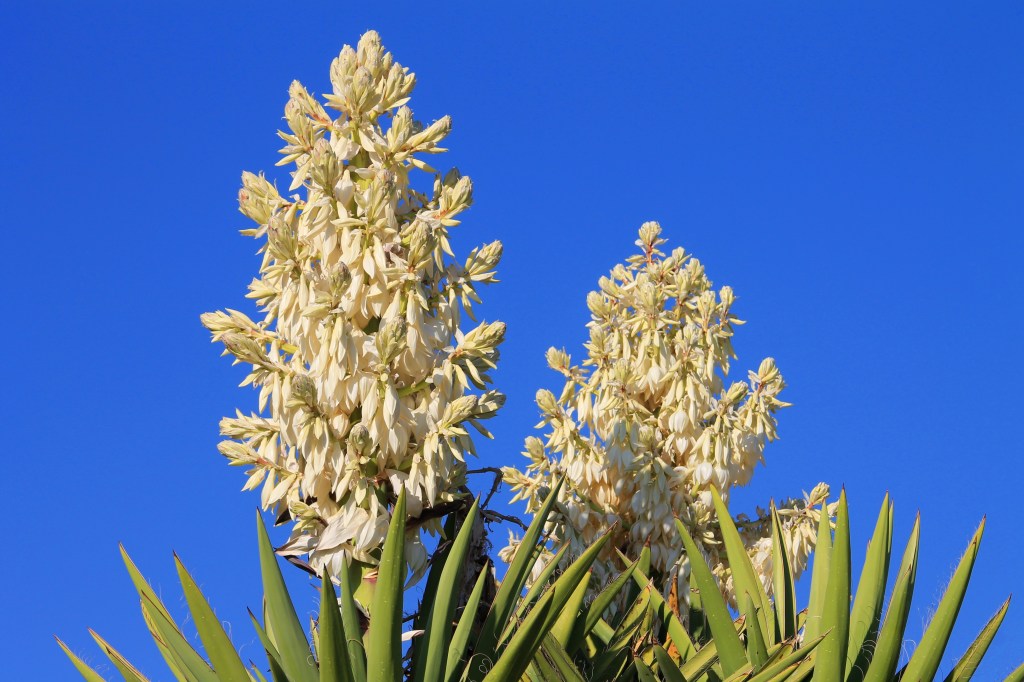
The huge cream-colored flower stalks of the yucca are some of the most spectacular flowers in the world. Here in the northern Chihuahuan Desert of West Texas and El Paso, we are fortunate to have five major species of yucca including the Torrey yucca or Spanish dagger, soap tree yucca, banana yucca, Thompson’s yucca and giant dagger.
In the El Paso area the Torrey and soap tree yuccas are the most common. Like all yuccas they are pollinated by yucca moths. Without the yucca moth, yuccas would lose the only insect that we know of that will pollinate yucca flowers. On the other side of the coin, the main food of the yucca moth is the yucca. This fact begs the question, what came first, the yucca or the moth?
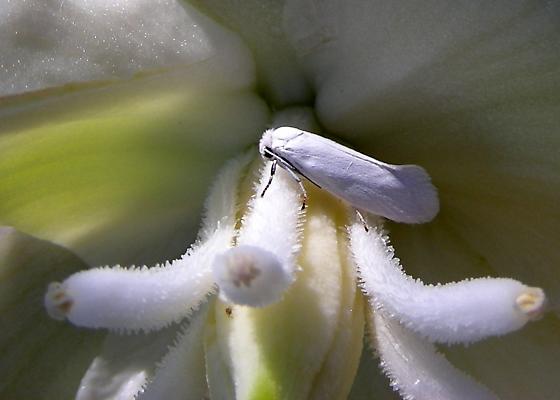
The wings of the yucca moth are white making it hard to see them when they are on the flower. The caterpillars on the other hand are reddish pink. Once the female yucca moth pollinates the flower, she will lay her eggs on the flower so that as the fertilized flower develops into a fruit, the eggs will be inside. Then when the eggs hatch the caterpillars have a food supply ready to feed on.

Most yuccas in El Paso bloom during the months of April and May, but the Torrey yucca can bloom any month of the year.
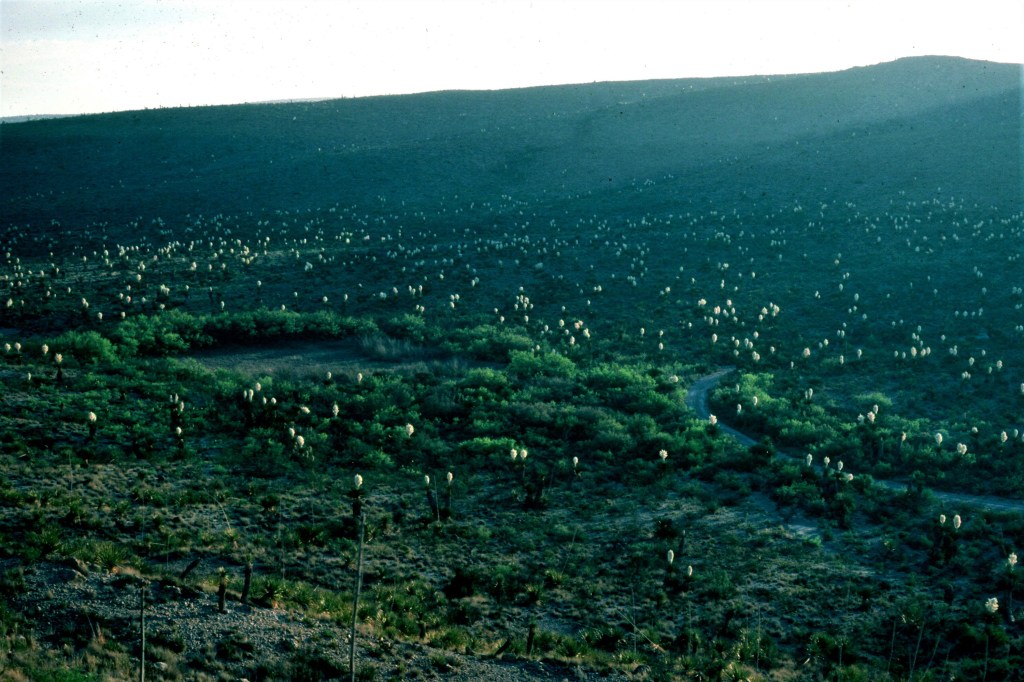
The most spectacular place to see yuccas in flowers is without a doubt Dagger Flat in Big Bend National Park. It’s a 14-mile round trip winding gravel road to get there, but the sight of hundreds of giant daggers in bloom, some reaching 20 feet tall, is an amazing experience. How many giant daggers bloom every year is dependent on winter rainfall and over all rainfall conditions during the previous year. To make sure you plan a trip during the best time, contact Big Bend National Park to learn how the daggers are doing from staff who have made recent trips to the area.
.
.
 Conservation Education